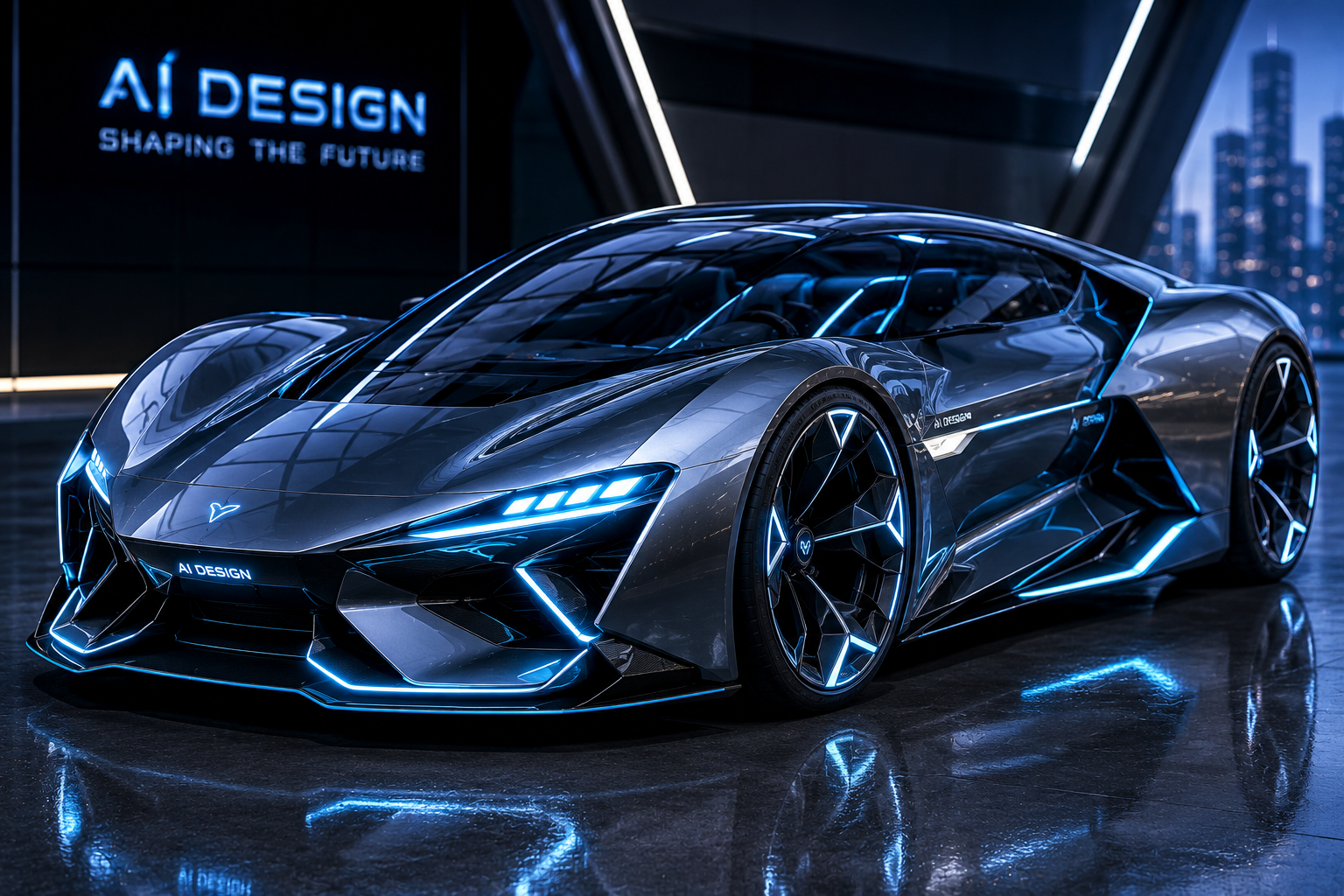
For More Than 100 Years, Humans Designed Cars. But What Happens When Artificial Intelligence Joins the Design Team?
Every iconic car in history began inside a human mind.
From the curves of a Ferrari to the aggression of a Lamborghini and the timeless elegance of a Porsche, automotive design has always been considered an art form.
It was something emotional.
Something deeply human.
But a fascinating question is beginning to challenge that idea.
What if computers could do it better?
Not just assist engineers.
Not simply calculate numbers.
But actually design cars.
Cars that are faster.
Safer.
More efficient.
And perhaps even more beautiful.
It sounds like science fiction.
But it's already happening.
And the results are making many people wonder:
Could artificial intelligence eventually become the world's greatest car designer?
AI Doesn't Think Like Humans
Human designers rely on experience.
Creativity.
Emotion.
And intuition.
Artificial intelligence works differently.
AI analyzes enormous amounts of information.
Millions of images.
Thousands of designs.
Years of engineering data.
Crash test results.
Aerodynamics.
Consumer preferences.
Manufacturing costs.
And then it searches for patterns that humans may never notice.
That's what makes AI so powerful.
It doesn't become tired.
It doesn't forget.
And it doesn't have personal bias.
In many ways, AI sees possibilities that people simply can't.
The First AI-Generated Car Designs Already Exist
Artificial intelligence isn't waiting for the future.
It's already entering the automotive industry.
Several manufacturers and technology companies are using AI to generate:
Exterior designs
Wheel patterns
Interior layouts
Dashboard interfaces
Aerodynamic structures
Manufacturing solutions
Instead of drawing a single design, AI can create thousands of possibilities in seconds.
Engineers then choose the most promising concepts.
What once required weeks can now happen in minutes.
And that changes everything.
AI Sees Shapes Humans Would Never Imagine
Humans often design according to tradition.
We expect certain proportions.
Certain headlights.
Certain grilles.
Artificial intelligence doesn't carry those assumptions.
Sometimes AI creates strange shapes.
Unusual curves.
Unexpected structures.
At first glance, some of these designs may even look weird.
But many turn out to be incredibly efficient.
Because AI focuses on performance.
Not habits.
Not trends.
Not ego.
And that freedom sometimes leads to breakthroughs.
Nature Has Become AI's Greatest Teacher
One of the most fascinating developments is biomimicry.
Instead of copying existing cars, AI studies nature.
Birds.
Sharks.
Dolphins.
Falcons.
Even insects.
Nature has spent millions of years optimizing movement.
Artificial intelligence analyzes those patterns and applies them to vehicles.
Some AI-generated structures resemble bones.
Others resemble wings.
Some mimic the hydrodynamic shapes of marine animals.
Humans might never think this way naturally.
But AI has no limits.
And sometimes, nature already contains the answers engineers are searching for.
Can AI Create More Aerodynamic Cars?
Aerodynamics determine:
Speed
Stability
Efficiency
Energy consumption
Even tiny improvements can make huge differences.
Traditionally, engineers relied on wind tunnels and years of experimentation.
Artificial intelligence changes that process.
AI can simulate countless airflow scenarios in an incredibly short time.
It identifies hidden inefficiencies.
Discovers better shapes.
And proposes solutions almost instantly.
As electric vehicles become more common, aerodynamics become even more important.
Because better airflow means more driving range.
And more range means happier drivers.
AI Could Make Cars Safer Than Ever
Safety may be where artificial intelligence delivers its biggest contribution.
Before a car is built, AI can predict:
Collision points
Structural weaknesses
Occupant injuries
Airbag performance
Material stress
Engineers no longer need to rely entirely on physical crash tests.
Millions of digital simulations can happen before the first prototype even exists.
This saves:
Time
Money
Materials
Most importantly, it saves lives.
And when safety improves, everyone benefits.
Future Factories May Be Designed by AI Too
Artificial intelligence isn't only changing the cars.
It's changing how they're built.
Modern factories increasingly use AI to optimize:
Assembly lines
Robot movements
Material usage
Quality control
Supply chains
Some experts believe future factories will become self-optimizing systems.
Machines communicating with machines.
Robots learning from robots.
Production becoming faster and more efficient than ever before.
Ironically, the factory itself may become as intelligent as the vehicle being produced.
But Can AI Replace Human Creativity?
This is where the debate becomes fascinating.
Cars aren't just machines.
They're emotional.
People fall in love with cars.
They admire them.
Dream about them.
Hang posters of them on bedroom walls.
Emotion matters.
And emotion is difficult to program.
Humans understand beauty.
Passion.
Storytelling.
Culture.
Memories.
Artificial intelligence understands patterns.
But does it understand dreams?
Can it understand nostalgia?
Can it create a design that gives someone goosebumps?
Nobody truly knows.
And perhaps that's why human designers still remain essential.
AI and Humans May Become the Perfect Team
Perhaps the future isn't humans versus machines.
Perhaps it's humans with machines.
Imagine:
AI handles calculations.
AI improves aerodynamics.
AI predicts safety outcomes.
AI optimizes manufacturing.
Meanwhile, humans provide:
Emotion
Creativity
Storytelling
Character
Identity
Together, they could create vehicles neither side could build alone.
This partnership may represent the best of both worlds.
Logic and imagination.
Science and art.
Data and passion.
Could AI Create the Next Ferrari?
Think about history.
Many legendary cars became famous because they had personality.
Ferrari.
Porsche.
Lamborghini.
McLaren.
These brands built emotional connections.
Would enthusiasts accept a supercar designed entirely by algorithms?
Or would they miss the human touch?
Perhaps future generations won't care.
After all, every generation defines beauty differently.
What seems strange today could become normal tomorrow.
And that's what makes this conversation so exciting.
Because nobody truly knows where it ends.
Will AI Design Cars We Can't Even Imagine?
History teaches us something interesting.
People once believed cars would always resemble horse carriages.
They believed smartphones were impossible.
They laughed at electric vehicles.
And yet, technology transformed everything.
Artificial intelligence may eventually create cars so different that today's vehicles appear ancient.
Perhaps wheels themselves will change.
Perhaps cabins will become lounges.
Perhaps shapes will resemble living organisms.
Or perhaps AI will discover ideas humans never considered possible.
The future has a habit of surprising people.
Final Thoughts
Artificial intelligence is already changing the automotive world.
It can analyze faster.
Simulate better.
Optimize smarter.
And solve problems humans may overlook.
But cars have always been more than transportation.
They represent dreams.
Identity.
Emotion.
Freedom.
And those qualities are deeply human.
So perhaps the real question isn't whether AI can design better cars than humans.
Perhaps the better question is:
What happens when human imagination and artificial intelligence work together?
Because the greatest cars of tomorrow may not be designed by humans.
And they may not be designed by machines.
They may be created by both.
And that partnership could redefine the future of mobility forever
Leave a Comment
Your comment will appear after moderation.