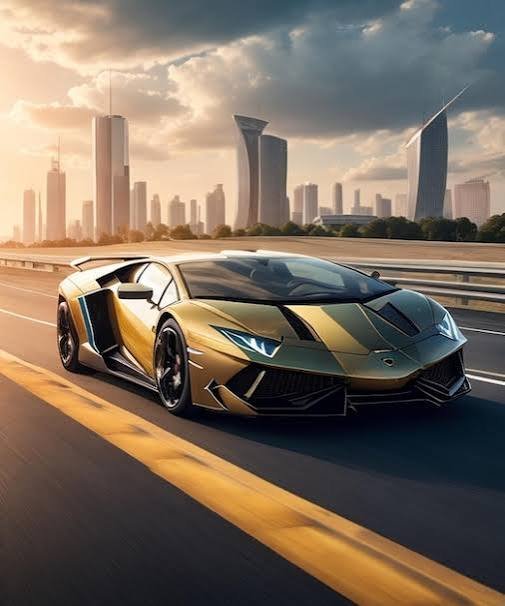
The World's Fastest Cars Aren't Always What They Seem
When most people think of supercars, they imagine unbelievable speed.
Ferrari.
Lamborghini.
McLaren.
Bugatti.
These names instantly create images of machines capable of dominating everything on the road.
After all, when manufacturers advertise 1,000 horsepower and top speeds above 200 mph, it's easy to assume these cars are unstoppable.
But reality is more complicated.
Because sometimes, the world's most expensive supercars are not nearly as fast in real life as their marketing suggests.
And in some surprising cases, ordinary performance cars costing a fraction of the price can keep up remarkably well.
So why does this happen?
Are manufacturers exaggerating?
Are supercars overrated?
Or is there something most people simply don't understand about speed?
The answer might surprise you.
Horsepower Doesn't Tell The Whole Story
One of the biggest misconceptions in the automotive world is that horsepower automatically equals speed.
It doesn't.
Horsepower matters.
But it's only one piece of a much larger puzzle.
Real-world performance depends on:
Weight
Tires
Aerodynamics
Transmission tuning
Traction
Road conditions
Weather
Driver skill
A car with 700 horsepower isn't automatically faster than a lighter car with 500 horsepower.
Because speed is about efficiency, not just power.
And this is where reality starts separating itself from marketing.
Top Speed Numbers Can Be Misleading
Manufacturers love advertising incredible top speeds.
210 mph.
220 mph.
250 mph.
The numbers sound impressive.
But here's the truth.
Very few owners will ever experience those speeds.
Why?
Because reaching maximum speed requires:
Ideal conditions
Long stretches of road
Perfect weather
Professional drivers
In everyday life, traffic laws and road conditions make these numbers almost meaningless.
Most drivers spend their lives below 80 mph.
Which means that a car's ability to reach 230 mph often matters less than people think.
Acceleration Matters More Than Top Speed
Ask professional drivers what feels exciting, and many will point to acceleration rather than top speed.
The rush.
The instant response.
The feeling of being pushed into the seat.
That's where modern performance cars shine.
Interestingly, many electric vehicles have changed expectations completely.
Cars costing far less than traditional supercars can deliver astonishing acceleration thanks to instant torque.
This has created a fascinating reality:
Some six-figure supercars struggle to pull away from vehicles costing much less.
And that reality has forced manufacturers to rethink what performance truly means.
Weight Is The Hidden Enemy
Modern supercars are technological masterpieces.
But technology comes with a price.
Weight.
Luxury features.
Safety systems.
Large wheels.
Complex electronics.
Hybrid systems.
All of these additions increase mass.
And heavier cars require more energy to move.
Some modern supercars weigh far more than enthusiasts realize.
Meanwhile, lightweight sports cars often deliver sharper handling and more engaging driving experiences.
Sometimes less really is more.
And engineers have known this for decades.
The Problem With Real-World Roads
Marketing videos are filmed under perfect conditions.
Smooth surfaces.
Warm weather.
Professional drivers.
Closed tracks.
Real life is different.
Roads have:
Traffic
Bumps
Rain
Dust
Imperfections
And suddenly, all that incredible power becomes difficult to use.
Because having 800 horsepower means very little if your tires can't transfer that power to the road.
That's why many owners rarely experience their car's full potential.
Not because the car lacks capability.
But because reality isn't a racetrack.
Driver Skill Makes A Huge Difference
People often underestimate the importance of the human behind the wheel.
Professional drivers can unlock astonishing performance.
Average drivers can't.
Modern supercars are incredibly fast.
But they're also incredibly demanding.
Braking points.
Cornering techniques.
Throttle control.
Weight transfer.
These skills matter.
A talented driver in a slower car can often outperform an inexperienced driver in a much more powerful machine.
Because speed isn't only about machines.
It's about people.
Aerodynamics Can Create Unexpected Results
Some supercars are designed primarily for high-speed stability.
Large wings.
Aggressive bodywork.
Massive air channels.
These features improve performance at extreme speeds.
But they also create drag.
And drag can reduce straight-line acceleration under certain conditions.
Manufacturers constantly balance:
Downforce
Efficiency
Stability
Speed
It's an engineering compromise.
And every compromise affects performance differently.
Why Some Cars Feel Faster Than They Actually Are
Human emotions play tricks on us.
Engine noise.
Vibrations.
Gear shifts.
Exhaust sounds.
All these sensations create drama.
And drama creates excitement.
Ironically, some cars that feel insanely fast aren't actually the quickest.
Meanwhile, silent electric performance cars can achieve incredible acceleration while feeling almost effortless.
Speed and sensation are not always the same thing.
And that's why perceptions can be misleading.
Social Media Has Changed Expectations
Thanks to YouTube and social media, people constantly see launch control videos and drag races.
Everything looks easy.
Everything looks dramatic.
But cameras rarely show:
Tire temperatures
Wind conditions
Driver experience
Road quality
Viewers see highlights.
Not reality.
This creates unrealistic expectations.
People assume every supercar owner experiences those incredible numbers every day.
The truth is far less glamorous.
Most owners simply enjoy the beauty, craftsmanship, and emotion these cars provide.
Because supercars are about much more than numbers.
Sometimes The Cheapest Cars Create The Biggest Smiles
Here's something many enthusiasts eventually discover.
Fun and speed aren't always the same thing.
Some lightweight sports cars with modest power deliver incredible driving experiences.
They communicate with the driver.
They feel alive.
They encourage skill.
And because they're easier to use, drivers often enjoy them more.
Which raises an interesting question:
Is ultimate speed really the goal?
Or is the goal enjoyment?
Because those are two very different things.
Why Manufacturers Love Big Numbers
Marketing departments understand psychology.
Bigger numbers attract attention.
More horsepower.
Higher top speed.
Faster acceleration.
These statistics generate headlines.
They sell dreams.
And dreams sell cars.
But numbers don't tell the entire story.
Because emotions can't be measured.
And neither can the joy of driving.
The Biggest Secret About Supercars
Perhaps the greatest truth of all is this:
People don't buy supercars because they need extreme speed.
They buy them because of how they make them feel.
The sound.
The design.
The presence.
The attention.
The childhood dreams.
Because owning a supercar has always been emotional.
Not logical.
And maybe that's exactly how it should be.
Final Thoughts
Supercars remain some of the most extraordinary machines ever created.
They are engineering masterpieces.
Works of art.
Symbols of passion.
But speed isn't always as simple as advertisements make it seem.
Horsepower numbers can be misleading.
Top speed records rarely matter in everyday life.
Driver skill, weight, aerodynamics, and road conditions all play enormous roles.
And sometimes, the fastest car on paper isn't the most enjoyable car in reality.
Because in the end, cars are not remembered for numbers.
They're remembered for feelings.
And perhaps that's why some supercars, despite being slower than people expect, still capture hearts around the world.
Leave a Comment
Your comment will appear after moderation.