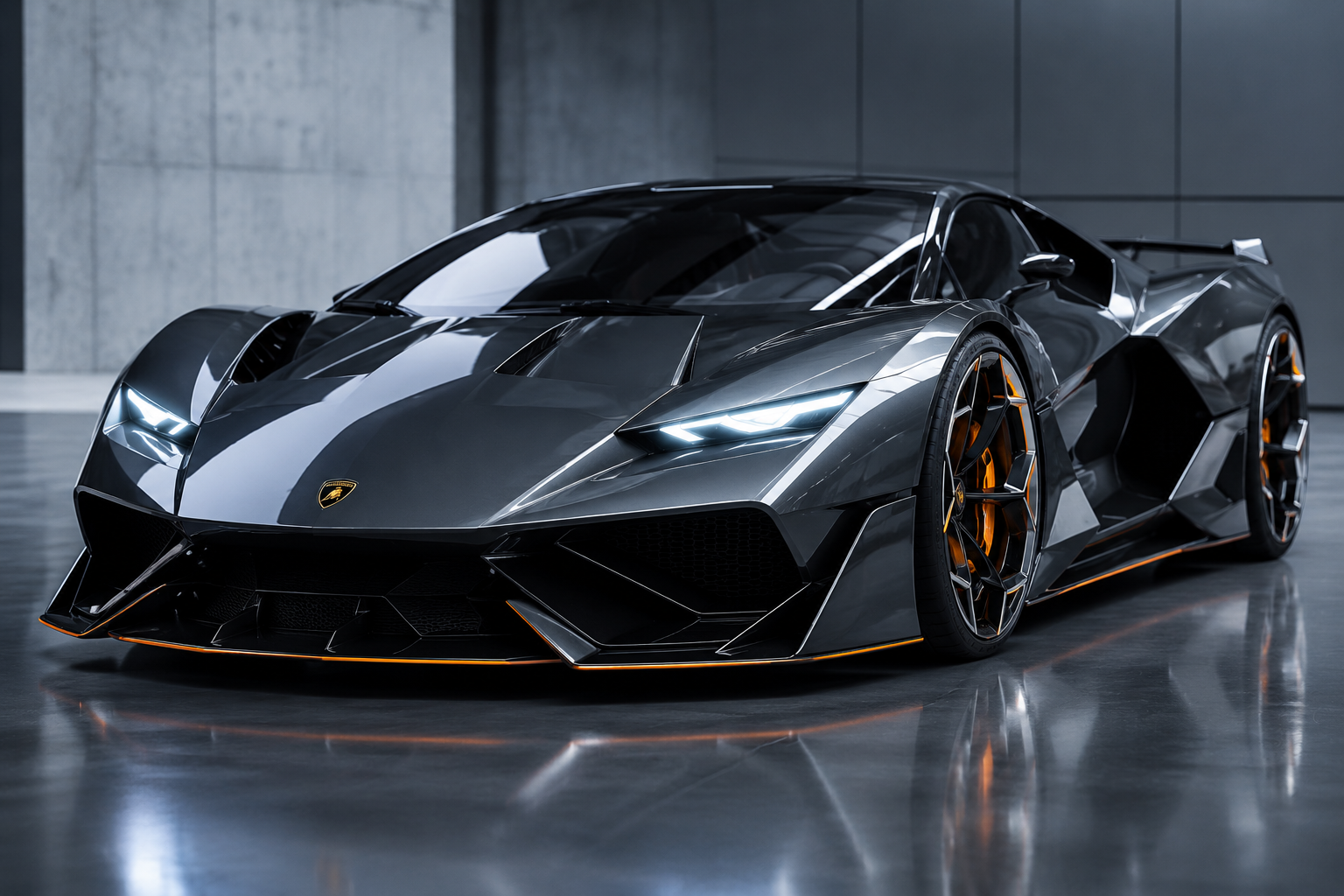
The Most Beautiful Cars in the World Didn't Comrom Other Carse F
At first glance, cars may seem like machines created entirely by engineers.
Metal.
Engines.
Wheels.
Screens.
Technology.
But behind some of the most breathtaking vehicles ever built lies something far more unexpected.
Nature.
Predators.
Fighter jets.
Sharks.
Birds.
Wild animals.
Even insects.
For decades, automotive designers have borrowed ideas from the world around them to create cars that don't simply transport people.
They create emotions.
Because great design isn't only about speed.
It's about making people feel something.
And once you discover where many famous cars got their inspiration, you'll never look at them the same way again.
Why Car Designers Look Beyond Cars
Nature has spent millions of years perfecting shapes.
Predators evolved to look intimidating.
Birds evolved for efficiency.
Sharks evolved for speed.
Fighter jets were designed for aerodynamics and precision.
Automotive designers understand an important truth:
Humans are emotional creatures.
We don't fall in love with numbers.
We fall in love with feelings.
That's why many vehicles are designed to communicate power, aggression, elegance, or speed before they even move.
And surprisingly, some of the most iconic designs in automotive history borrowed those emotions directly from nature and aviation.
Why Sharks Have Influenced Car Design for Decades
Sharks are among nature's most feared predators.
Their bodies are sleek.
Their eyes are focused.
And their mouths are unmistakably aggressive.
Sound familiar?
Look closely at many modern performance cars.
Huge front grilles.
Sharp headlights.
Wide air intakes.
Designers often refer to this as the "shark face."
The goal is simple.
Create a car that looks fast even while parked.
Some famous examples include:
BMW's signature kidney grilles
Lamborghini's aggressive front ends
Maserati sports cars
Modern Lexus performance models
These cars appear ready to attack the road.
And that's no accident.
Humans instinctively recognize predator features.
Even subconsciously.
A vehicle that resembles a predator feels powerful.
And power sells.
Predator-Style Headlights Trigger Emotional Responses
Have you ever noticed that some headlights seem angry?
That's intentional.
Designers carefully shape headlights to resemble eyes.
And eyes carry emotion.
Narrow, sharp headlights often communicate:
Confidence
Intelligence
Aggression
Dominance
Wide and rounded headlights create completely different emotions.
They appear friendlier and softer.
Luxury and performance brands usually prefer aggressive designs because they activate something primal inside us.
It's the same reason predators in nature have focused eyes.
Humans naturally associate those shapes with strength.
And without realizing it, our brains respond immediately.
Fighter Jets Changed Car Design Forever
Perhaps no machine has influenced modern supercars more than fighter aircraft.
Fighter jets are symbols of:
Precision
Technology
Speed
Power
Exactly the emotions automotive manufacturers want customers to feel.
Look inside modern supercars.
You'll notice similarities everywhere.
Cockpit-Inspired Iterniors
Many performance vehicles use driver-focused cabins inspired by fighter jets.
Examples include:
Digital instrument clusters
Toggle switches
Start buttons hidden beneath covers
Center consoles angled toward the driver
Heads-up displays
The driver sits surrounded by controls, almost like a pilot.
This isn't just design.
It's theater.
Manufacturers want every drive to feel special.
They want drivers to feel like they're preparing for takeoff.
Aircraft-Inspired Start Buttons
Some supercars use red covers over ignition buttons.
Why?
Because fighter jets use protective covers over critical switches.
This instantly creates excitement.
Starting the car feels dramatic.
And drama creates memories.
The Lamborghini Inspired by a Bull
Not all inspirations come from predators or aircraft.
Some come from powerful animals.
Lamborghini has a deep connection with bulls.
Many famous models carry names inspired by legendary fighting bulls.
Why?
Because bulls symbolize:
Strength
Aggression
Energy
Fearlessness
Even Lamborghini's logo features an angry bull.
And when you look at the sharp body lines of their cars, you can almost sense that animalistic energy.
The design language reflects the spirit of the creature itself.
Birds Have Inspired Aerodynamics
Birds are nature's engineers.
For millions of years, they have mastered flight.
Automotive designers study birds to improve:
Airflow
Stability
Efficiency
Some sports cars use body shapes that mimic the smooth curves found in birds.
Rear spoilers often function similarly to wings.
Air channels help control airflow just like feathers guide air around a bird.
Nature solved many aerodynamic problems long before humans existed.
Engineers simply learned from it.
Cobra Snakes Inspired Legendary Cars
One of the most iconic names in automotive history is the Shelby Cobra.
Even the name itself comes from one of nature's most feared reptiles.
Why?
Because cobras symbolize:
Speed
Precision
Danger
Instant power
The long hood and muscular stance of the original Cobra perfectly matched that personality.
Even decades later, the name still commands respect.
Because humans naturally respond to symbols.
And animals are powerful symbols.
Why Modern Electric Cars Look Like Dolphins
Not every inspiration comes from aggressive creatures.
Electric vehicles often take inspiration from smooth, streamlined shapes.
Many EVs feature:
Rounded curves
Minimal grilles
Soft edges
Fluid body lines
These designs often resemble dolphins.
Dolphins are efficient swimmers.
Smooth.
Elegant.
Advanced.
Exactly the image EV manufacturers want to project.
Instead of aggression, they communicate intelligence and sustainability.
Insects Have Inspired Supercars Too
Believe it or not, some designers have studied insects.
Butterflies inspired wing-style doors.
Beetles influenced compact car shapes.
Dragonflies inspired lightweight structures.
Insects have evolved remarkable solutions for movement and efficiency.
Nature remains one of the greatest design teachers ever known.
Why Humans Love Animal-Inspired Cars
There's a psychological reason behind all this.
Humans evolved alongside animals.
For thousands of years, recognizing predators meant survival.
Recognizing powerful creatures meant understanding danger.
Those instincts still exist.
When we see:
Sharp eyes
Aggressive shapes
Muscular proportions
Our brains react emotionally.
Even if we don't realize it.
That's why some cars feel exciting before we even know their specifications.
Design speaks directly to emotion.
And emotion creates desire.
The Future May Be Inspired by Nature More Than Ever
As electric vehicles and AI technology evolve, designers are increasingly looking back to nature.
Future cars may borrow ideas from:
Falcons
Sharks
Dolphins
Eagles
Wolves
Manta rays
Biomimicry, the practice of copying nature's solutions, is becoming increasingly important.
Because nature has already spent millions of years perfecting efficiency.
And engineers are finally catching up.
Final Thoughts
Cars are far more than machines.
They are rolling pieces of art.
And behind many iconic designs lies a fascinating secret.
The world's fastest predators.
The elegance of birds.
The power of bulls.
The precision of fighter jets.
The efficiency of dolphins.
All of these influences have shaped the vehicles we admire today.
Perhaps that's why some cars feel alive.
Because in many ways, they carry the spirit of the creatures and machines that inspired them.
The next time you see an aggressive grille, razor-sharp headlights, or a cockpit-like interior, remember:
You may not just be looking at a car.
You might be looking at a shark.
A falcon.
Or even a fighter jet disguised as four wheels.
Leave a Comment
Your comment will appear after moderation.