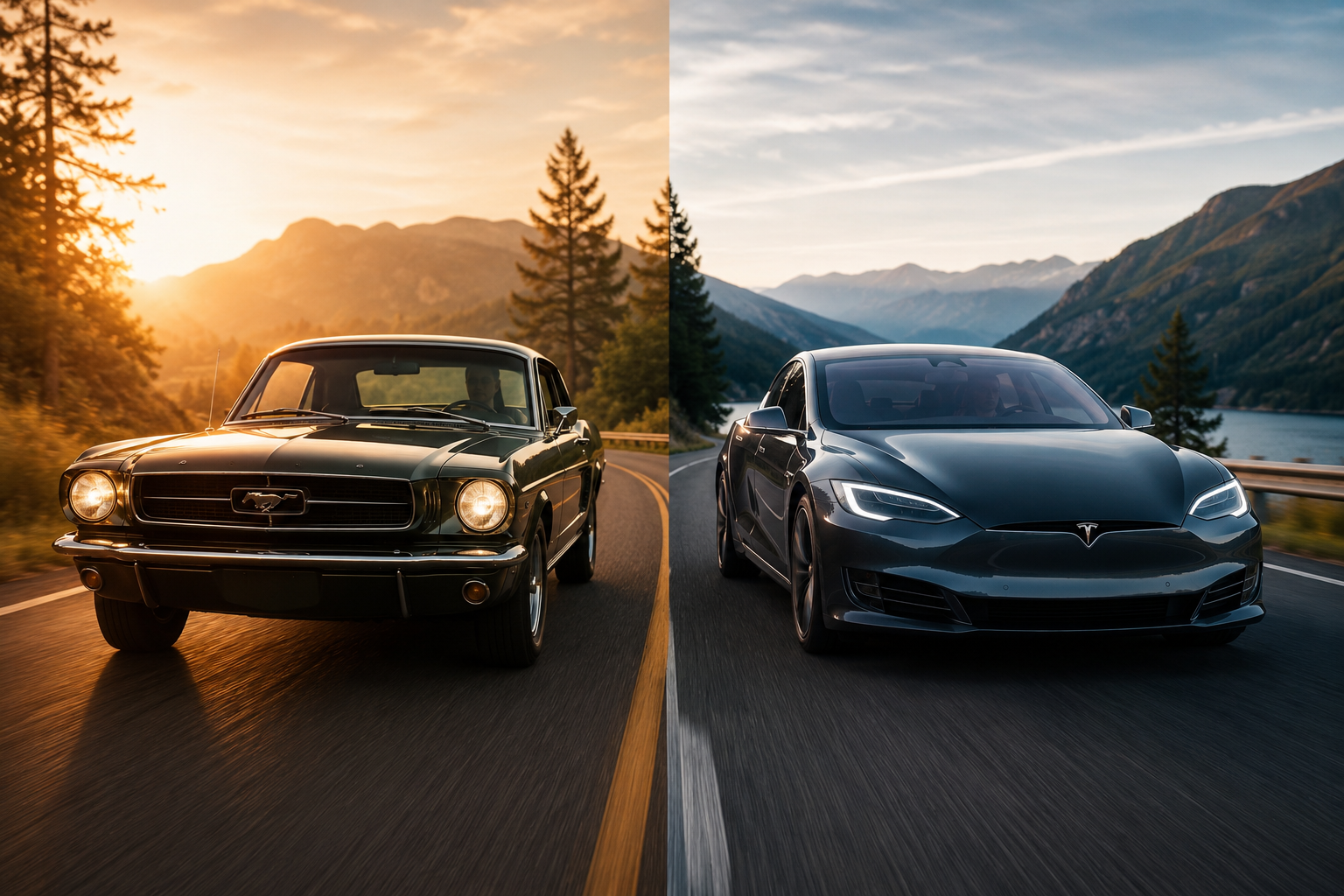
Why Do Some People Miss Cars That Were Slower, Less Safe, and Less Advanced?
Modern cars are faster.
They're safer.
They're smarter.
They consume less fuel.
And in many ways, they're objectively better than the machines that came before them.
So why do countless car enthusiasts still dream about cars from the 1980s, 1990s, and early 2000s?
Why do people smile when they hear an old engine start?
Why do some drivers willingly spend weekends restoring vehicles that lack touchscreens, adaptive cruise control, and even Bluetooth?
And perhaps the most interesting question of all:
Why do old cars somehow feel more alive?
The answer has very little to do with horsepower or technology.
And almost everything to do with emotion.
Because cars have never been just machines.
For many people, they've always been experiences.
Back When Cars Had Personalities
There was a time when every car felt different.
You didn't need to see the badge.
You could recognize certain cars simply by their sound.
Some engines growled.
Some screamed.
Others rumbled.
Every startup had character.
Every gear change had personality.
Even imperfections became part of the experience.
Cars weren't trying to isolate drivers from the road.
They wanted you to feel it.
And that feeling created memories.
Because people rarely remember specifications.
They remember emotions.
The Sound That Modern Cars Can Never Replace
Close your eyes for a moment.
Imagine an old naturally aspirated engine firing up on a cold morning.
The vibration.
The rumble.
The mechanical sounds.
The slight unpredictability.
Nothing about it feels artificial.
It's raw.
It's imperfect.
And that's exactly why people love it.
Modern vehicles are incredibly refined.
Especially electric cars.
They're quiet.
Smooth.
Silent.
Efficient.
But sometimes that perfection removes something important.
Emotion.
Old engines spoke to drivers.
You could hear the revs rise.
Feel the vibrations through the steering wheel.
Sense the machine working beneath you.
It wasn't just transportation.
It was communication.
Manual Gearboxes Made You Part of the Experience
Driving a manual transmission wasn't always convenient.
Traffic jams could be annoying.
Hill starts required practice.
Missed shifts happened.
But that's precisely what made driving memorable.
You weren't simply sitting in a vehicle.
You were participating.
Your left foot mattered.
Your right hand mattered.
Timing mattered.
Skill mattered.
Every smooth shift felt rewarding.
Every perfect downshift felt satisfying.
Driving demanded attention.
And attention creates connection.
Modern automatic transmissions are incredibly impressive.
They shift faster than humans.
They're more efficient.
More comfortable.
But they also remove one important ingredient:
Involvement.
For many enthusiasts, that involvement was the soul of driving.
New Cars Are Better. But Better Doesn't Always Mean More Fun
This is where things become interesting.
Ask any engineer.
Modern cars outperform old cars in almost every category.
Safety.
Fuel economy.
Reliability.
Technology.
Comfort.
Acceleration.
There's no debate.
New cars are objectively better.
Yet emotions don't operate objectively.
People don't fall in love with statistics.
They fall in love with experiences.
A perfectly optimized machine isn't always the most memorable machine.
Sometimes imperfections create character.
And character creates attachment.
Why Electric Cars Feel So Different
Electric vehicles represent the future.
There's no denying that.
They're incredibly fast.
They're smooth.
They're quiet.
They're efficient.
And they offer technology that seemed impossible just a decade ago.
But many lifelong enthusiasts struggle to connect emotionally with them.
Why?
Because electric cars eliminate many sensations drivers grew up loving.
There's no engine roar.
No vibration.
No gear changes.
No rising revs.
No mechanical drama.
For some people, that's progress.
For others, it feels like losing part of the experience.
It's similar to replacing vinyl records with digital music.
Digital is cleaner.
But vinyl feels alive.
Drivers Used to Feel Connected to the Road
Older cars demanded your attention.
The steering was heavier.
The brakes required more feedback.
You felt every bump in the road.
You could sense grip levels.
You learned the personality of the machine.
Modern vehicles, on the other hand, are designed to remove stress.
Electronic systems manage traction.
Computers assist steering.
Suspensions absorb imperfections.
Noise insulation blocks outside sounds.
The result is comfort.
But sometimes comfort comes at the expense of connection.
Drivers become passengers in their own experience.
And many enthusiasts miss that connection.
The Little Flaws We Secretly Loved
Old cars weren't perfect.
Far from it.
They leaked oil.
They rattled.
They required maintenance.
Air conditioning wasn't always great.
Fuel economy wasn't impressive.
And reliability could sometimes test your patience.
Yet strangely, many owners remember those flaws with affection.
Because imperfections create stories.
And stories create memories.
Nobody tells emotional stories about software updates.
But people still laugh about the time their old car refused to start on a rainy morning.
Or the road trip where the radio barely worked.
Or the first car they learned to drive.
The flaws became part of the relationship.
And relationships are rarely perfect.
Cars Used to Be Simpler
Step inside many modern vehicles and you'll find:
Giant touchscreens
Voice assistants
Driving modes
Cameras
Sensors
Software updates
Artificial intelligence
Impressive?
Absolutely.
But older cars offered simplicity.
You turned a key.
You grabbed the gear lever.
You drove.
No menus.
No settings.
No notifications.
No software downloads.
Just you and the machine.
That simplicity created something rare in today's world:
Focus.
And people often miss that.
Why Nostalgia Makes Old Cars Feel Special
Memory has a funny way of editing reality.
People don't always remember the problems.
They remember the emotions.
The first road trip.
The first date.
The first late-night drive with friends.
The songs playing on the radio.
The excitement of getting behind the wheel.
For many people, old cars represent moments in life rather than machines themselves.
They're time capsules.
A smell.
A sound.
A memory.
And memories are powerful.
Sometimes what we truly miss isn't the car.
It's the version of ourselves that existed when we owned it.
Will Future Generations Feel the Same About Today's Cars?
One day, today's vehicles will become classics.
People may talk nostalgically about:
Early Teslas
First-generation electric cars
Touchscreen dashboards
Autonomous driving systems
The next generation might feel emotional about technologies that seem ordinary today.
Because every era creates memories.
And memories create nostalgia.
The cycle never ends.
Final Thoughts
Old cars aren't loved because they were perfect.
They weren't.
Modern cars are safer, smarter, and better in almost every measurable way.
But numbers don't explain passion.
Old cars felt alive because they demanded something from us.
Attention.
Skill.
Patience.
Connection.
They made us participants instead of passengers.
Perhaps that's why their sounds still give us goosebumps.
Why manual gearboxes still make enthusiasts smile.
Why certain memories never fade.
And why, despite all the incredible technology surrounding us, many people still believe that some of the greatest driving experiences happened long before touchscreens and silent electric motors arrived.
Because sometimes, being imperfect is exactly what makes something unforgettable.
Leave a Comment
Your comment will appear after moderation.