Why Some Cars Look Expensive Before You Even See the Price Tag
Park a Rs. 35 lakh hatchback next to a Rs. 1.5 crore sedan and ask a random passerby which one looks expensive. Most of the time, they'll get it right. But occasionally — and this is the interesting part — they won't.
That tells you something important: perceived luxury isn't the same thing as actual cost. It's a designed experience, engineered the same way a fragrance or a hotel lobby is engineered, to make your brain arrive at a conclusion before you've consciously decided anything.
The Three-Second Verdict
Psychologists call it thin-slice judgment — the brain's tendency to form strong impressions from minimal information in under three seconds. We do it with people constantly: the way someone stands, the shoes they wear, how they hold eye contact. Cars get the same treatment.
What designers understand, and what most buyers don't consciously register, is that the brain is running pattern recognition against a lifetime of accumulated signals. A certain headlight shape, a particular C-pillar angle, the way the hood slopes — these aren't neutral aesthetic choices. They're a vocabulary, and your brain already knows how to read it.
The Face Does the Heavy Lifting
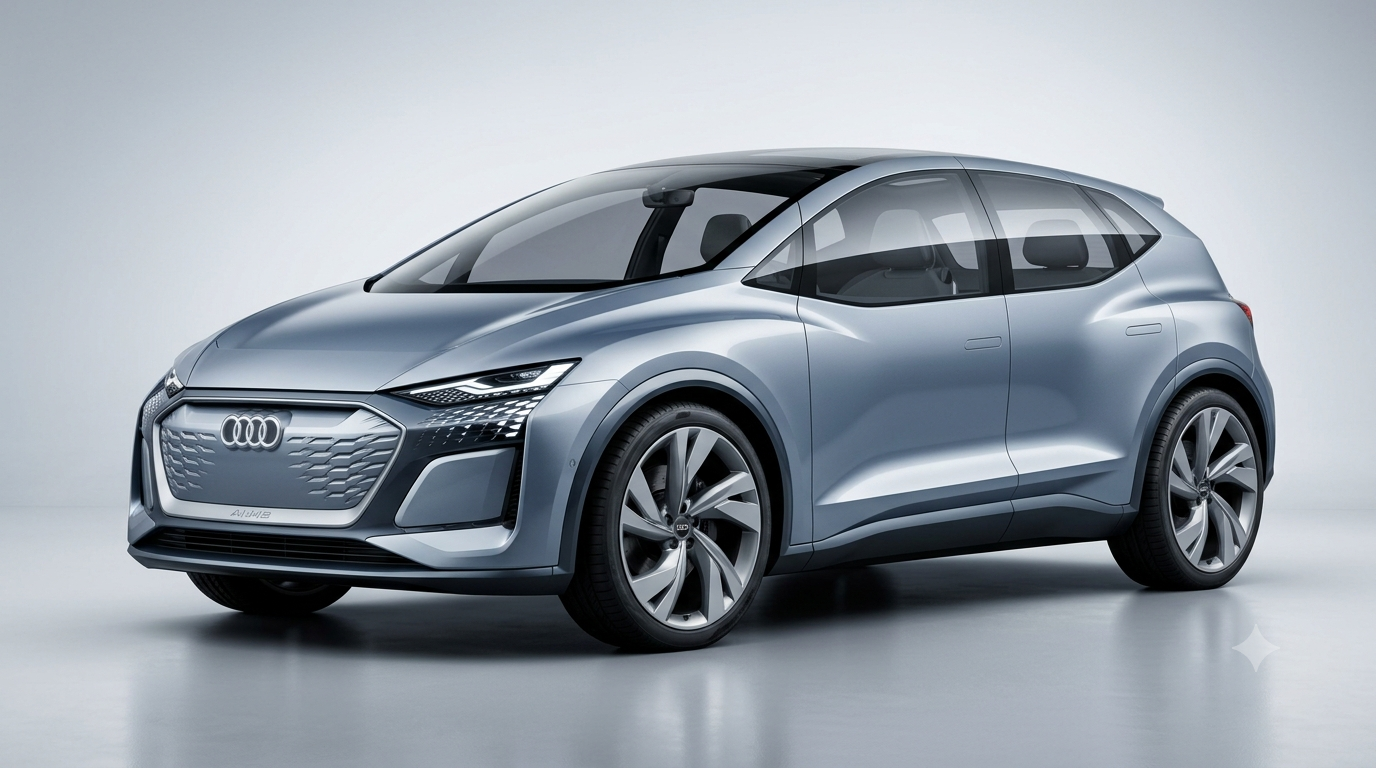
The front of a car is its face, and faces communicate before anything else happens. Most luxury brands converge on the same instinct: narrow, sharp headlights positioned low and wide. Why? Because horizontally stretched eyes read as confident and controlled. The same psychology behind why a slightly narrowed gaze projects authority in a human face.
Compare that to the large, rounded headlights on friendlier-looking cars — family hatchbacks, MPVs, budget city cars. They're warm and approachable, which is exactly right for what they're selling. But approachable doesn't read as premium. The brain conflates dominance with value.
This is why modern affordable cars that want to punch above their weight almost always start with a redesigned lighting signature. It's the fastest visual upgrade you can make.
Grilles and the Psychology of Presence
The growing size of automotive grilles over the last decade has been almost comical, and almost entirely psychological. Functionally, a massive grille is often unnecessary — many EVs behind those enormous openings have no radiator to cool. The grille is theatre.
The association goes back decades, to when large-displacement engines sat behind large air intakes on genuinely powerful cars. That visual shorthand embedded itself culturally: big grille equals big car equals important person driving it. Designers have been exploiting that shortcut ever since.
It works. Cars with substantial front-end presence feel more commanding on the road, which is itself a kind of luxury — the luxury of being noticed, of not having to yield.
Color Does More Work Than You'd Think
The automotive color palette is surprisingly small given how many paint options exist. Most premium purchases cluster around black, white, silver, grey, and deep blues. The outliers — bright yellows, oranges, vivid reds — are exciting but they register differently. Excitement and luxury aren't the same emotion.
Black in particular carries a specific weight: authority, formality, the absence of unnecessary decoration. There's a reason executive fleets default to it. White has migrated from clinical to aspirational, partly through association with premium EVs and tech culture. Silver and grey read as engineering confidence — colours chosen by someone who isn't trying to impress you.
Loud colours demand attention. Quiet colours suggest they don't need to.
Sound Is a Material
This one surprises people. Walk up to a well-specced car and close the door. The sound is heavier, more final — what engineers describe as a solid thunk versus the tinny click of a cheaper panel. That difference isn't accidental. Luxury brands employ acoustic engineers specifically to tune the sounds of doors, turn signals, startup chimes, and button clicks, because the brain interprets sonic depth as physical quality.
A door that sounds hollow undermines everything else the car is trying to say about itself, no matter what it looks like. Sound is a material in the same way leather or aluminium is a material. It shapes the experience.
Less Is Actually More — and Here's Why
Budget interiors are visually busy. Not because the designers wanted them that way, but because each additional physical button or vent or trim piece is a cost-optimised solution to a problem. It accumulates.
Premium interiors are ruthlessly edited. Clean surfaces, hidden controls, minimal visual clutter. This reads as confidence — the quiet assurance of a product that doesn't need to demonstrate its features by showing them all at once. It's the same principle behind why a well-made suit has fewer visible seams than a cheap one, or why an expensive restaurant menu has fewer items. Restraint is expensive.
Ambient lighting belongs in this conversation too. A softly lit cabin at night transforms a functional space into an environment, which is really what luxury is selling — not specifications, but the feeling of being somewhere considered.
The Honest Complication
The uncomfortable flip side of all this: the psychology works both ways. Some genuinely expensive cars fail to create any of these impressions, because they prioritised engineering over theater. And some affordable cars do it so well that owners are regularly asked what kind of car they drive in a tone that assumes the answer is something pricier.
What this means practically is that perceived value and actual value have always been negotiable. Designers know this. The more you understand the specific signals they're using, the more clearly you can see what a car is actually made of — versus what it's made to look like.
That's not cynicism. It's just literacy.
Leave a Comment
Your comment will appear after moderation.