China's EV Boom: How Chinese Automakers Are Quietly Rewriting the Rules of the Global Auto Industry
For decades, the global auto industry was shaped by German engineering, Japanese efficiency, and American scale. Detroit made the classics, Stuttgart was known for precision, and Tokyo built a reputation for reliability. Chinese carmakers were mostly seen as low-cost followers rather than innovators.
That assumption no longer survives contact with reality.
Today, China dominates global electric vehicle production on a scale rarely seen in modern industrial history. According to the International Energy Agency’s Global EV Outlook 2025, Chinese manufacturers produced approximately 12.4 million electric vehicles in 2024, accounting for more than 70 percent of total global EV production. China also became the world’s largest auto exporter, shipping 5.5 million vehicles abroad in 2024.
The change didn’t take long. What started as a policy push to cut emissions and support EV adoption has turned into a full industrial system built around batteries, software, fast manufacturing, and tightly connected supply chains. And its impact is now being felt well beyond China.
Metric | Figure |
|---|---|
Share of global EV production held by China (2024) | 70%+ |
EVs produced in China (2024) | 12.4 million |
Vehicles exported by China (2024) | 5.5 million |
EV export growth year-on-year | 87% |
Projected China EV market revenue (2025) | $378 billion |
Overseas Chinese OEM manufacturing capacity by 2026 | 4.3 million vehicles |
Share of China’s new car sales projected to be electric in 2025 | 60% |
Sources: International Energy Agency Global EV Outlook 2025 · Bloomberg · China Passenger Car Association · Automotive Manufacturing Solutions · Carbon Credits
From Domestic Price Wars to Global Push
China’s international expansion was driven partly by problems at home.
The domestic EV market became intensely competitive as hundreds of companies fought for market share. At one point, there were reportedly around 500 EV manufacturers in China. Competition triggered an aggressive price war that compressed margins across the industry.
Companies were left with two clear options: keep competing in a crowded domestic market with thin margins, or look overseas for growth and better returns.
They chose expansion.
Chinese EV exports surged 87 percent year-on-year, reaching nearly 200,000 units in a single month during late 2025. What initially appeared to be a temporary export boom quickly became a long-term strategic realignment.
The domestic pressure had an unintended effect: it forced Chinese automakers to become leaner, faster, and more globally aggressive.
Price wars at home pushed companies to cut costs, move faster, and compete more aggressively abroad. Tariffs changed how they design and position products, but they haven’t really slowed their expansion.
— Carbon Credits Report, January 2026
The Export Surge That Shocked the Industry
China’s auto exports have grown into one of the biggest trade shifts of the decade. In 2024, the country shipped 5.5 million vehicles, overtaking Japan to become the world’s largest car exporter, with projections pointing to more than 7 million annually by 2025.
Electric and plug-in hybrid models are driving most of this growth.
Europe has become a key market for Chinese brands. Companies like BYD and MG expanded rapidly, while Chinese automakers also gained market share across several European countries.
Their presence is also growing across Southeast Asia, Latin America, and the Middle East.
Market | EV Share of New Car Sales (2025) |
|---|---|
China | 60% |
United Kingdom | 30% |
Europe | 25% |
United States | ~12% |
Companies Driving China’s EV Expansion
BYD
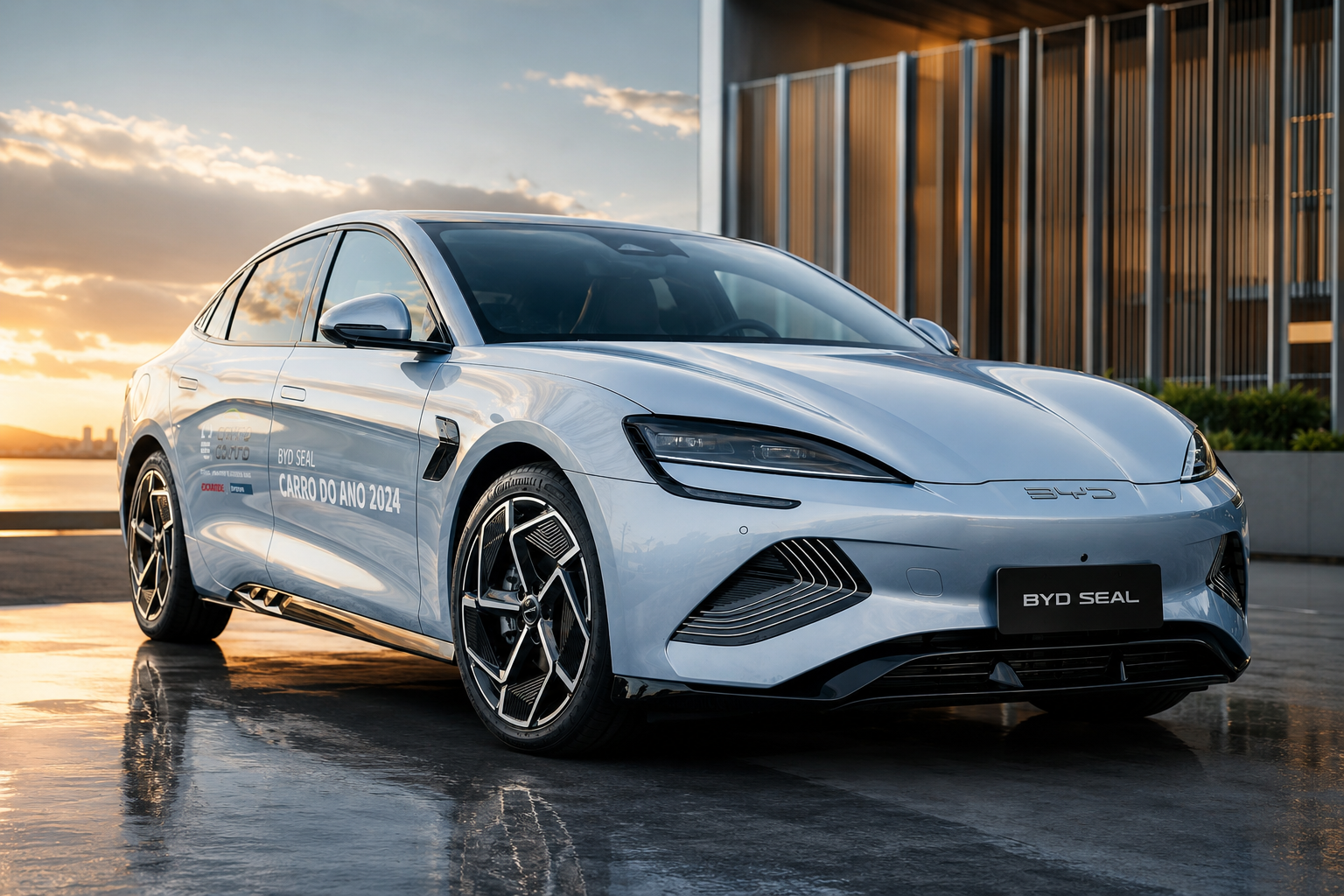
BYD has become the face of China’s EV rise. The company moved past Tesla in global EV sales and built an advantage through its in-house battery production, which helps keep costs lower than many competitors.
The company has also expanded quickly in Europe, increased its focus on plug-in hybrids, and started building a factory in Hungary to support local production.
CATL
When it comes to EV batteries, CATL is one of the industry’s biggest players. The company supplies batteries to both Chinese and international automakers and controls a large share of the global battery market.
Its rapid growth highlights how much of the EV supply chain is now centered in China.
Geely
Geely expanded aggressively outside China, increasing exports and building partnerships in regions such as the Middle East and Southeast Asia. The company also strengthened its global reach through brands and investments including Volvo Cars, Polestar, and Lynk & Co.
Chery
Chery became one of China’s strongest exporters by focusing heavily on overseas production and local assembly, especially in Brazil and Southeast Asia. That strategy helped the company reduce costs and avoid some tariff pressure.
Xiaomi Auto
Xiaomi entering the car industry showed how tech companies are starting to influence the EV market. Its approach brought faster software updates, connected ecosystems, and a more consumer-tech style of product development into the automotive space.
XPeng
XPeng drew attention through its partnership with Volkswagen. The deal reflected a broader shift in the industry, where some Western automakers are now looking to Chinese firms for EV platforms, software, and technology partnerships.
The Rise of “China Speed”
One phrase heard more often across the auto industry today is “China Speed.”
While many traditional automakers can take five to seven years to develop a new vehicle platform, some Chinese EV companies are doing it in as little as 18 to 36 months.
That faster pace comes from closer supplier coordination, software-focused development, quicker decision-making, and shorter product feedback cycles.
Even Volkswagen has acknowledged the gap and started reducing some development timelines to stay competitive.
Part of the difference is also cultural. Chinese automakers tend to move quickly, update products more often, and approach vehicles more like tech products than traditional long-term engineering projects.
Battery Supply Chains: China’s Biggest Advantage
China’s biggest strength in the EV industry may not be car production alone, but its control over the battery supply chain.
The country handles a large share of the world’s lithium processing, along with major refining capacity for materials like cobalt, manganese, and rare earth elements used in EV batteries.
That control helps Chinese companies reduce costs and scale production faster than many rivals.
Companies such as BYD and CATL have built strong advantages through large-scale battery production and tightly connected supply chains — something Western automakers are still trying to catch up with.
This is also why governments in Europe and North America keep talking about reducing dependence on Chinese supply chains. The challenge is that rebuilding those systems elsewhere could take years and require massive investment.
Tariffs Slowed China’s EV Expansion — But Didn’t Stop It
As Chinese automakers expanded globally, governments in Europe, the United States, and other markets responded with new tariffs and trade restrictions.
The European Union added extra duties on Chinese EV imports, while countries such as Brazil and Turkey also introduced higher import taxes.
But Chinese companies adjusted quickly instead of pulling back.
Many shifted focus toward plug-in hybrids in markets where tariffs were lighter, while also speeding up plans to build factories overseas and produce vehicles closer to customers.
BYD’s factory project in Hungary is one of the clearest examples of that approach. Building vehicles inside Europe allows companies to reduce the impact of import tariffs and strengthen their local presence.
Industry forecasts now suggest Chinese automakers will continue expanding manufacturing capacity outside China over the next few years, especially across Europe and Southeast Asia.
At this point, the shift is bigger than exports alone — Chinese automakers are increasingly becoming part of the global manufacturing landscape.
Tariffs on Chinese EVs
Region | Tariff / Restriction |
|---|---|
EU | ~17%–48% additional duties (varies by brand) |
USA & Canada | >100% tariffs on Chinese EVs |
Turkey | 40% import tariff |
Brazil | Gradual rise up to ~35% by 2026 |
Mexico | Reduced/removed EV import exemptions |
China’s Response
Strategy | Key Impact |
|---|---|
Plug-in Hybrid (PHEV) push | Avoids some EV tariffs in EU |
Overseas factories | Local production reduces tariff pressure |
EU PHEV growth | Chinese brands >13% share, surpassing some rivals |
Overseas Expansion
Country | Key Project |
|---|---|
Hungary | Major BYD plant (EU production hub) |
Turkey | 150k vehicles/year capacity |
Indonesia | ~$1B EV plant |
Thailand | Active 150k/year plant |
Big Picture
Metric | Projection |
|---|---|
Overseas EV capacity | ~4.3M vehicles/year by 2026 |
Southeast Asia growth | ~1.2M vehicles/year by 2026 |
The rise of China’s EV industry isn’t just a story about electric cars — it’s a story about industrial transformation on a massive scale. Over the last decade, China didn’t simply try to compete with traditional automakers; it rebuilt large parts of the automotive ecosystem around batteries, software, and manufacturing speed.
While many Western brands were still refining combustion technology and slowly adapting to electrification, Chinese manufacturers focused on controlling the entire supply chain. Companies invested heavily in battery production, charging infrastructure, and vertically integrated manufacturing systems that allowed them to move faster and reduce costs at scale. In many ways, these vehicles are being developed more like consumer technology products than conventional automobiles.
Trade barriers and tariffs have done little to stop that momentum. Instead, they’ve accelerated a new phase of global expansion. Rather than relying entirely on exports from China, automakers are increasingly establishing production facilities in Europe, Southeast Asia, and Latin America. What began as an export strategy is gradually evolving into a global manufacturing presence.
For consumers, the increased competition is likely to bring major benefits. Faster innovation cycles, improved technology, and more affordable electric vehicles are already reshaping expectations across the market. Features that once appeared only in premium models are becoming increasingly accessible as competition intensifies.
For legacy automakers, however, the challenge is far more significant. Brand recognition and incremental upgrades are no longer enough in a market moving at this pace. Competing effectively now requires structural change — from software integration and battery sourcing to manufacturing efficiency and product development speed.
The automotive industry is undergoing its biggest transformation since the assembly line revolutionized production more than a century ago. Whether the badge on the driveway says BYD, Volkswagen, or Toyota, the forces reshaping the industry are already redefining who leads the market, how vehicles are built, and how quickly innovation reaches consumers.
Leave a Comment
Your comment will appear after moderation.