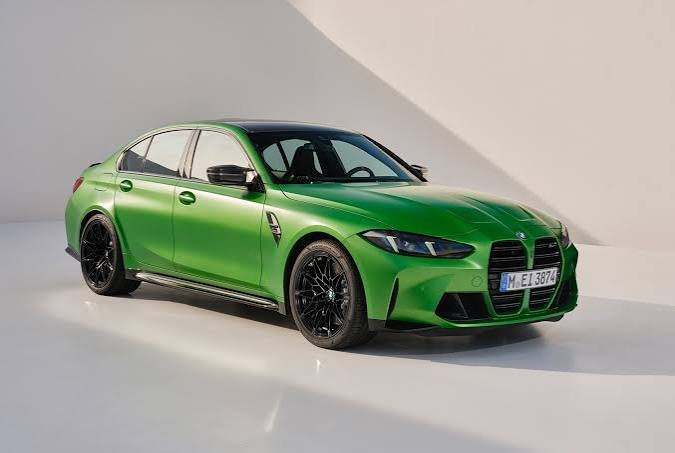
You don't have to be a car person to have noticed it. Pull up to any traffic light these days and look around. The car next to you is glaring. The SUV behind it is scowling. The pickup truck three lanes over looks like it's about to say something unpleasant. Nobody parked an actual predator at that intersection, and yet — somehow — that's exactly what your brain is registering.
Something changed. Slowly, then all at once, the world's cars went from looking vaguely cheerful or at worst neutral, to looking like they've got a problem with you specifically. And the headlights are ground zero for that transformation. They've gone from round, wide-set, friendly eyes to narrow, hooded, squinting slits that make even a family hatchback look like it had a terrible morning and isn't going to pretend otherwise.
This didn't happen by accident. Every millimetre of a car's face is argued over, tested, and decided deliberately by very smart people in very expensive studios. So if cars are angry now, it's because someone chose to make them that way. The real question is why — and the answer sits somewhere at the junction of evolutionary biology, market research, and a slow cultural shift that nobody really voted on.
Your Brain Was Designed to See Faces
Before any of the car stuff, there's a slightly uncomfortable truth about how human beings work: we cannot stop seeing faces in things. Clouds, burnt toast, power outlets, tree bark — if there are two round shapes above one horizontal shape, your brain is basically helpless. It assembles a face whether you want it to or not.
This is called pareidolia, and it's not a quirk or a glitch. It's a feature. Our ancestors who were quickest at spotting faces — a predator's eyes in the undergrowth, a rival's expression across a clearing — were the ones who lived long enough to pass their genes on. Evolution spent hundreds of thousands of years making us paranoid, hyperactive face-detectors. And now we use that same neurological machinery to read car fronts.
Research has put numbers on this. When 96 people ranging in age from 18 to 72 were shown production car front ends, 94 percent of them saw faces. Not some of them. Ninety-four percent. And nearly everyone who saw a face reported the same thing: the expression read as angry to some degree. Not content, not neutral, not happy — angry.
That wasn't a coincidence. That was the cars telling them something.
The Headlights Are the Eyes. And the Eyes Are Everything.
Think about what makes a human face look threatening. Narrowed eyes. Lowered brow. Tension around the forehead. An upward, compressed set to the jaw. When you read someone as angry or dominant, the eyes carry most of that information — they drop, they narrow, they harden.
Now look at what happened to headlights over the past two decades. In the 1960s and 70s, headlights were round or at most softly rectangular. They sat high and wide. They were large. The VW Beetle, the classic Mini, the Citroen 2CV — all had lights that practically beamed at you. People loved those cars partly because they seemed kind. Looking at one in the rear-view mirror didn't put you on edge.
Then, starting in the 1990s, designers began pulling headlights down and inward. They got narrower. They started to angle downward at the outer edges, producing exactly the same visual signal as a lowered brow on a human face. The more technically sophisticated the headlight became, the more this effect could be pushed — because you were no longer constrained to a simple sealed-beam unit. You could shape light however you wanted.
LED technology is the thing that really broke the dam. When LEDs arrived in car headlights in the late 2000s, designers suddenly had individual light elements small enough to sculpt into almost any form. Suddenly a headlight didn't have to look like a headlight. It could look like a stripe, a claw, an angular slash. And if you wanted to create the impression of a predator's narrowed, focused stare, you now had exactly the tool to do it with.
Somebody Ran the Numbers, and Angry Won
Here's where this story takes a turn that should make everyone think for a moment. This shift toward aggressive, angry-looking car faces is not a designer's whim or an aesthetic accident. It's grounded in consumer research, and the research said something blunt: people, overwhelmingly, prefer cars that look dominant, masculine, and angry.
A European consulting firm called EFS Consulting Vienna ran a study asking participants to evaluate cars based on apparent personality traits — things like maturity, dominance, aggression, friendliness. The results were stark. Cars perceived as having an angry, powerful face were rated as significantly more desirable than cars with neutral or friendly expressions. The preferred vehicles were lower, wider, with narrow angled headlights and larger air intakes. One of the senior designers at a major automaker reportedly wanted to buy the research outright. That tells you something about how seriously the industry took it.
This is a feedback loop in slow motion. People prefer angry-looking cars. Designers build angry-looking cars. People buy them. The market signals back that angry is correct. The next design is angrier still.
What the Grille Has to Do With a Mouth
While the headlights do the heavy lifting, the grille is the co-conspirator. A wide, gaping air intake at the bottom of the front fascia reads — unconsciously, but reliably — as a wide-open mouth. Combine that with narrowed eyes above it and you have an expression the human brain parses in milliseconds as: aggressive, dominant, ready to lunge.
BMW's kidney grilles grew until they dominated the front face entirely. Ford's Raptor trucks are essentially a metallic open-mouthed roar pointed at the car in front. Lamborghinis have always looked like they're mid-snarl, but what's notable now is that even mild-mannered commuter crossovers are pulling the same tricks — hoods that slope steeply down at the front to create that low, forward-leaning, predatory posture; intakes that stretch corner to corner; DRL strips across the top of the face like a furrowed brow.
The language hasn't changed. Only the cars speaking it have.
EVs Made It Stranger — and More Deliberate
Here's the odd part. Electric vehicles, in theory, should have softened this trend. They don't need massive air intakes for engine cooling. Their front ends are freer than any petrol car's has ever been. Tesla, in its early days, just closed the front off almost completely — and caused minor uproar from people who found the blank face unsettling.
What actually happened is that EV designers, freed from engineering constraints, leaned harder into aggressive styling for purely expressive reasons. When you have no engine to cool and no transmission tunnel to work around, the entire front fascia is a blank canvas for communicating identity. Brands like BYD, Nio, Polestar, and the newer Chinese manufacturers entered the market using jagged, angular, luminous-strip headlights that look like something from a sci-fi film — and that look, clearly, intimidating.
The irony is complete: the quietest cars in history have the loudest, most aggressive faces.
The Feedback Loop Nobody Asked About
There's a study worth sitting with for a moment. Research published in the journal Transportation Research found that when people see cars anthropomorphically — when they read them as having faces — they're more likely to respond aggressively to other drivers who they perceive as threatening. The car's expression influences their own behaviour.
If that's true, we've built a system where cars are designed to look threatening, which makes drivers feel as though they're being threatened, which makes them respond more aggressively, which makes the case for more aggressive car design, which makes the cars look even more threatening.
It's worth asking — and designers and psychologists are starting to ask it — whether roads lined with scowling metal faces are actually a neutral environmental fact, or whether they're quietly contributing to an atmosphere where everyone is a little more on edge than they need to be. The road was never an animal kingdom. But we're designing it to look like one.
Is There a Way Back?
Some brands are starting to push back, quietly. Mazda's recent design language is deliberately soft-eyed and expressive without being aggressive. The Porsche 911 has kept its round headlights through generation after generation, partly as heritage and partly because a car that shape doesn't need to snarl — it communicates speed and precision through proportion alone. A few EV startups are deliberately experimenting with friendlier, more approachable front-end expressions, betting that a car which looks like it won't bite you might actually feel better to live with day to day.
But they're swimming against a very strong current. The market data still says people reach for the one that looks powerful. The one that looks like it narrowed its eyes at something and decided it didn't like it.
And until that changes — until enough people want a car whose face doesn't make the car in front of it quietly nervous — the headlights are going to keep squinting. The brows are going to keep dropping. The front end of the average car is going to keep looking like something with a short temper and a point to prove.
Drive carefully out there. The road has been a little hostile lately, and the cars aren't helping.
Leave a Comment
Your comment will appear after moderation.